

Trying to see the world from the right place
How we look at the world determines what we put where.
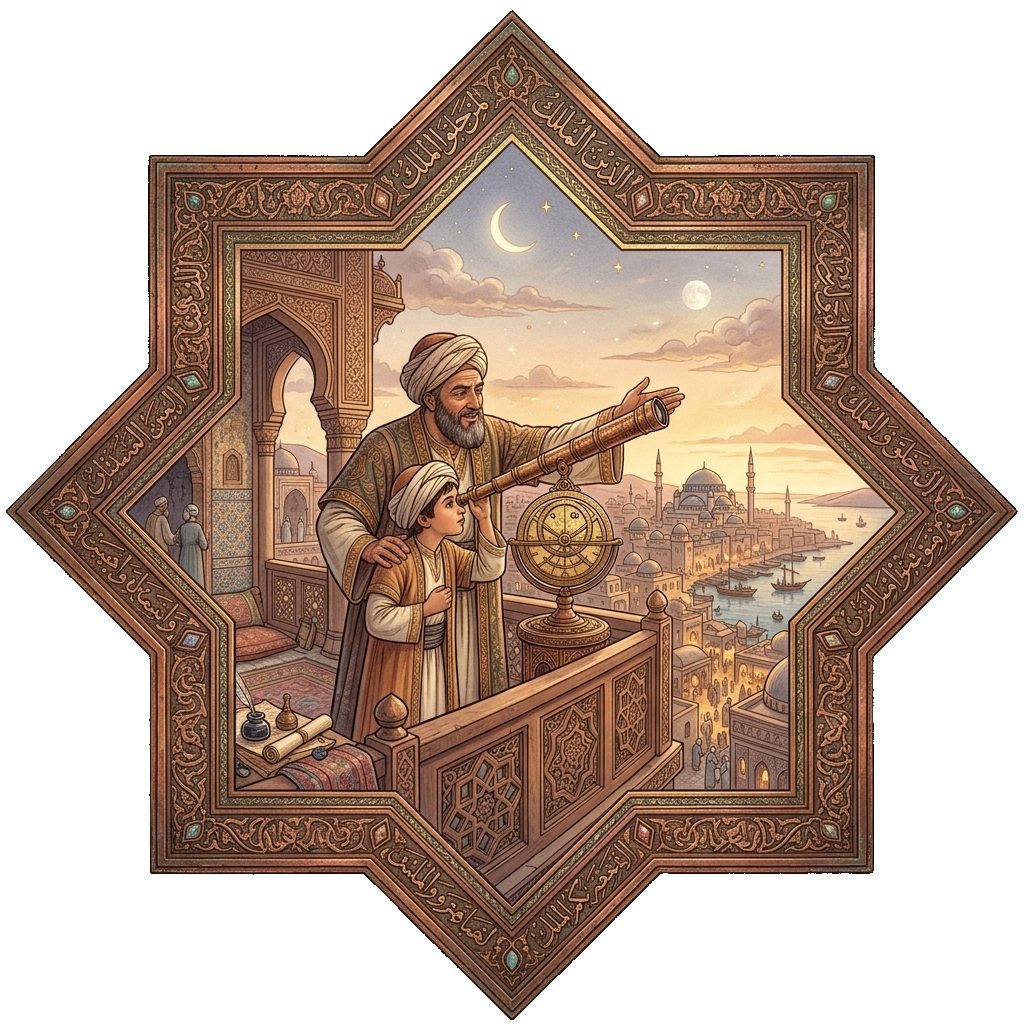
RUYAH; It is our effort to see people, knowledge, technology, family, profession and the earth without separating them from each other. Before giving a ready answer, he looks for the right question, the right place and the right direction.
What is RUYAH?
First we learn to look in the right place.
A tool can be very powerful; But it does not say on its own why it will be used and under whose responsibility it will be used. A piece of information may be very common; but it is not the whole truth. RUYAH helps people think by putting themselves, their knowledge and the tools they produce in their proper place.
RUYAH is not a ready-made answer list; It is the practice of asking the right questions, seeing the limits, and correcting one's own representation when necessary.
RUYAH in life
RUYAH becomes visible in our daily decisions through the following questions.
We act with the same perspective, from family to school, from profession to technology: we find the place without confusing people, information, tools and results.
Where does this information come from?
Separates source, context, and human interpretation; We do not consider any human representation to be the entire truth.
Discover truth and representationWhere does this tool put people?
Uses the machine as an auxiliary tool; We consider that the decision, trust and accountability remain with the person.
Look at BAIWho does this decision protect?
We think about the boundaries of the child, family, privacy, labor and community from the beginning, not later.
recognize SEDDWhat good does this work lead to?
Not only is production feasible; We look at how it serves people, the community and the earth.
See HAYR and UMRAN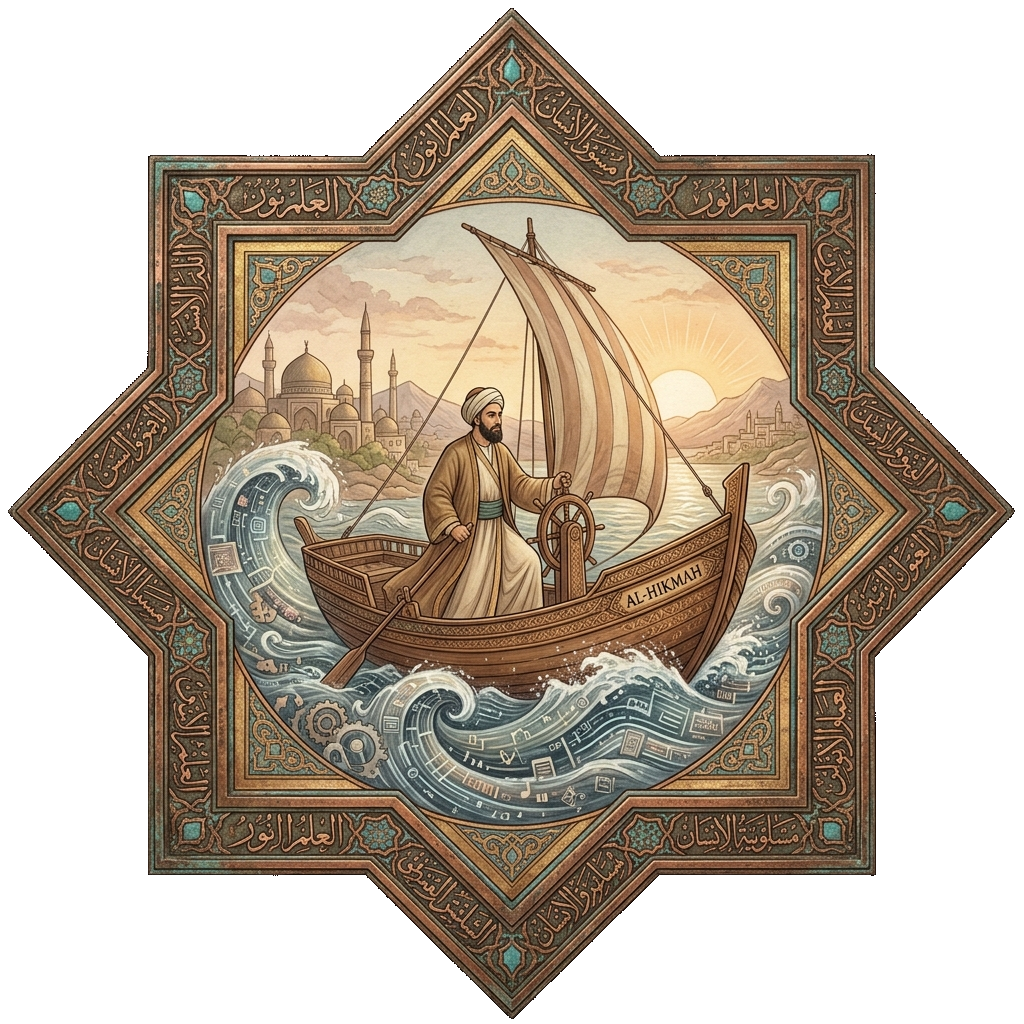
Our view on technology
We neither reject new tools out of fear nor replace them with humans.
Learns machine models, data and digital platforms; We improve our opportunities. It also asks how these tools affect people, knowledge, family and society; We do not leave the decision and responsibility authority to the machine.
Technology is a powerful tool; The person who gives direction and carries the bill remains.
How does RUYAH work?
First we see it, then we determine its location and correct it when necessary.
When we encounter a new tool, idea or process, we follow three simple steps. In this way, we neither remain closed to innovation nor do we embrace everything new excessively.
01 Diagnosis
What's happening? How does this development affect people, knowledge, family, profession and the earth?
02 Allocation
Where is the right place? We determine the place where people, knowledge, tools and responsibility do not mix.
03 Correction
What should we fix? We revisit faulty assumption, harmful functioning or incomplete representation.
Source and the limit of man
Revelation and human efforts to understand and produce are not the same thing.
The Quran is revelation. Translation, tafsir, science, model, software and institution are human efforts to understand or produce. These productions may approach the truth; but it is open to error, examination and correction.
Truth and Representation
Making human meaning through revelation; distinguishes truth from representation that is limited, sourced, and subject to correction.
Read truth and representationRevealed Constants and Limits
It distinguishes what is adhered to and what is not to be exceeded in the field of knowledge, judgment, intervention, rights, privacy and justice.
Read the constants and boundariesConstants and Tajdid
Its determination is at the source and border; He establishes the movement on the path of examination, correction, renewal and İHSAN of human representation.
Read the constants and tajdidi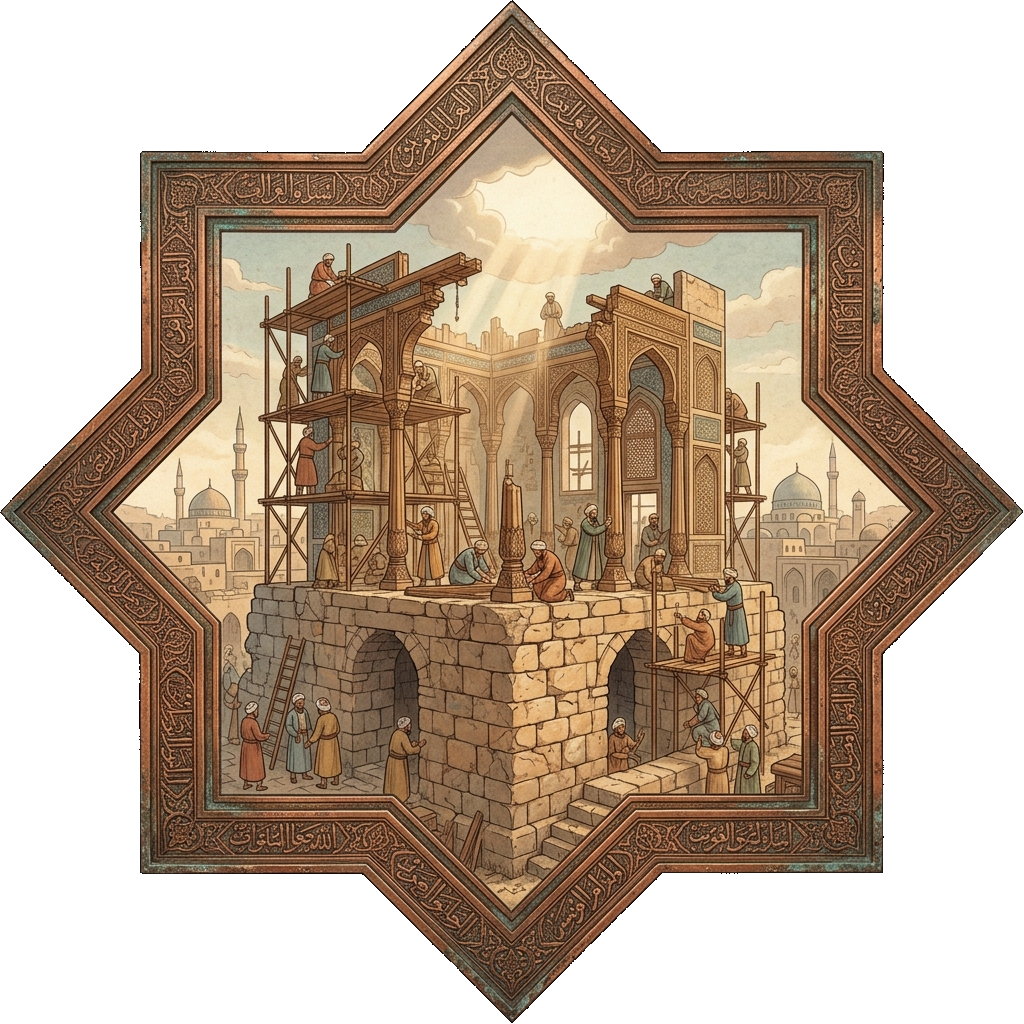
Constants and tajdid
We are determined in our direction and open to renewal in our representation and production.
RUYAH neither leaves everything to the flow of time nor considers a representation of man in the past as an immutable truth. While adhering to revealed constants and boundaries, he rethinks issues of family, education, profession, capital, technology and the internet; continues to examine and correct human production.
SIDRA is the limit that a person should not cross; MA reminds us of the nature and nature of existence.
Deepening path
RUYAH's concepts carry different questions in the same direction.
These concepts are not a list to be memorized one by one. It helps us to think together about the source, the limits of man, renewal, protection, beautification and the beneficial outcome.
01 Revelation
Measure of truth and source.
02 Truth and Representation
It separates the source authority from the boundary of human understanding and production.
03 ADAB
The order that puts existence, knowledge and people in the right place.
04 Tahafut
It corrects the limits and place of the knowledge claim.
05 Tajdid
It reconstructs the issues of the age without dissolving the constants.
06 SIDRA and MA
Without awareness of boundaries and nature, RUYAH cannot descend towards life.
07 ORDER
The correct order of people, information, technology and service.
08 NO
The entrusted service aspect of production.
09 UMRAN
Rooting of HAYR in life and in the order of civilization.
RUYAH concept atlas
Discover a concept in its connection with others.
Each concept opens the door to a specific question and responsibility. If you want, start with a short description; Then move on to the concept's own page and deep reading resources.
Source, truth and representation
With revelation, man's effort to understand and produce; It separates the constants that are adhered to and the boundaries that cannot be exceeded.
Temel kavram
Truth and Representation (EN)
Revelation is the source of truth; Human understanding and production is a representation open to examination in terms of source, method, competence, result and boundaries.
7 yakın kavram · 5 bağlantılı çalışma
Temel kavram
Revealed Constants and Revealed Limits (EN)
Revealed constants determine what we will adhere to; Revealed limits, on the other hand, indicate which limits humans should not exceed. RUYAH carries this direction with the effort of human understanding, accommodation and order.
6 yakın kavram · 1 bağlantılı çalışma
Measurement and growth
It tells us what is in its place and how people behave and grow up with this measure.
Temel kavram
ADAB (EN)
Measure and order that puts things, knowledge, people and behavior in their place.
7 yakın kavram · 2 bağlantılı çalışma
Temel kavram
LITERATURE (EN)
Conduct and representation procedure according to ADAB.
7 yakın kavram · 2 bağlantılı çalışma
Temel kavram
TE'DIB (EN)
The process of raising people in ADAB and EDEB.
4 yakın kavram · 1 bağlantılı çalışma
Boundaries and nature
The frontier of knowledge, reason, technology, representation and intervention; It reads the essence, nature and entrustment of existence together.
Temel kavram
SIDRA (EN)
SIDRA is the limit consciousness that states that man should not exceed the limits in the field of knowledge, reason, technology, representation and intervention.
8 yakın kavram · 1 bağlantılı çalışma
Temel kavram
MA (EN)
MA is the knowledge of putting the essence, nature and creation order of the being in the right place.
8 yakın kavram · 1 bağlantılı çalışma
Protection and beautification
It brings together the trust structure that protects the border and the door of quality that does the job well and properly.
Temel kavram
SEDD (EN)
SEDD is a border architecture that preserves the revealed boundaries in content, technology, data, family, education, media and field.
10 yakın kavram · 2 bağlantılı çalışma
Temel kavram
REPRESENTATION AND IHSAN (EN)
The transformation of RUYAH into action (REPRESENTATION) and the inner quality of this action (İHSAN).
9 yakın kavram · 3 bağlantılı çalışma
Courtyard, representation, HAYR and UMRAN
It connects the stage where RUYAH is visible, the method of representation, the line of civilization and the output that opens to HAYR.
Temel kavram
STAGE (EN)
The courtyard where RUYAH is visible.
4 yakın kavram · 2 bağlantılı çalışma
Temel kavram
PEOPLE (EN)
A civilizational community that walks around the same RUYAH, ADAB, EDEB, qibla, direction, knowledge and trust awareness.
3 yakın kavram · 2 bağlantılı çalışma
Temel kavram
WAQF (EN)
The line of opening the production to HAYR and Hayr-ı Âmm within the rights-law, permission, trust and SEDD.
8 yakın kavram · 2 bağlantılı çalışma
Link between concepts
No concept works in isolation from the others.
RUYAH is in the center; measure, boundaries, trust, representation, GOOD and UMRAN complement each other around it. The map shows in which questions these concepts meet.
Haritadaki ana bağlar
- RUYAHHakikat ve Temsil
- Hakikat ve TemsilVahyî Sabiteler ve Vahyî Hudutlar
- Hakikat ve TemsilTEMSİL ve İHSAN
- TEMSİL ve İHSANSAHN
Bring RUYAH to life
Read, think together, test, produce and benefit from it.
RUYAH is not just a text to be read. You can bring this perspective to life by joining a circle, working on a real issue or contributing to production.
- Think togetherRead and discuss a question, text, or issue with others in Circles.Discover Circles
- Observe and testParticipate in testing an idea through observation, experimentation, testing and real use in Labs.Discover Labs
- Produce togetherTurn an idea into a guide, tool, model, product, or working prototype in Build.Go to Build
- Contribute with your professionOpen your profession, qualification, representation and service experience to a common cause within KARDESH.Check out KARDESH
- See your results on the fieldIn the Valley, turn ideas into ingenuity in space, home, workshop, nature and real life.Go to Valley
- Share the benefitOpen the production that has passed inspection to the benefit of others through WAQF, considering rights, trust and charity.Switch to WAQF
From perspective to life
RUYAH is directed towards establishing a visible goodness and life order.
The right view becomes visible in SAHN, gains continuity with NIZAM, turns towards GOOD and turns into UMRAN in the family, institution, city and civilization life.
01 RUYAH
The ability to see with the measure of reality and to place it in the right place.
02 STAGE
The visible courtyard where RUYAH opens to life and production.
03 ORDER
The correct order of people, information, technology and service.
04 NO
God's consent, service and trust aspects of production.
05 UMRAN
Rooting of HAYR in the order of family, institution, city and civilization.
Deep reading
Atlas gives short directions; The corpus deepens the meaning.
Portal language provides introduction to the concept. For sources, context and extended reading, go to the RUYAH microsite, SEMANIYYA and the corpus.
RUYAH Microsite
RUYAH narrative, concept relationships and deep reading layer.
Go to micrositeRUYAH Collection
Memory of books, guides and resources on which portal summaries are based.
Go to corpusSEMANIYYA Foundation
The institutional root of the corpus, the trustworthy and service ground.
Get to know the foundationContinue from here
Start with the question closest to you; Understand the concept and move on to its equivalent in life.
The aim of RUYAH is to provide a perspective that puts people and their work in the right place, before teaching new words.
Derin okuma
Külliyatta oku
Portal özeti yön verir; kaynak, bağlam ve uzun okuma külliyat kayıtlarında derinleşir.
Atlas
RUYAH Concept Atlas (EN)
Concept atlas showing the relationships of ADAB, EDEB, TE'DIB, SIDRA, MA, SEDD, İHSAN, SAHN, REPRESENTATION, NATION and WAQF. (EN)
Külliyat kaydını açKitap
RUYAH, SAHN.BA, SEMANIYYA Collection (EN)
Source corpus of RUYAH concepts and portal and microsite architecture. (EN)
Külliyat kaydını açRapor
BAI Human Audit Report (EN)
A record of research addressing human decision, appeal, revocation, representation, and limits of liability in the use of models and automation. (EN)
Külliyat kaydını aç